Manama – National Audit Office:
During the second quarter of this year, the National Audit Office (NAO) organized and participated in a series of meetings and training courses held via video conference on cybersecurity awareness and the use of artificial intelligence in auditing.
Internally, the NAO organized an awareness session on "Cybersecurity and User Behaviors", which was presented by Khalid Shaheen, Information Security Supervisor, and attended by most of the NAO's employees. The session aimed to enhance employees' awareness of cybersecurity concepts and raise the level of commitment to safe behavior in the work environment.
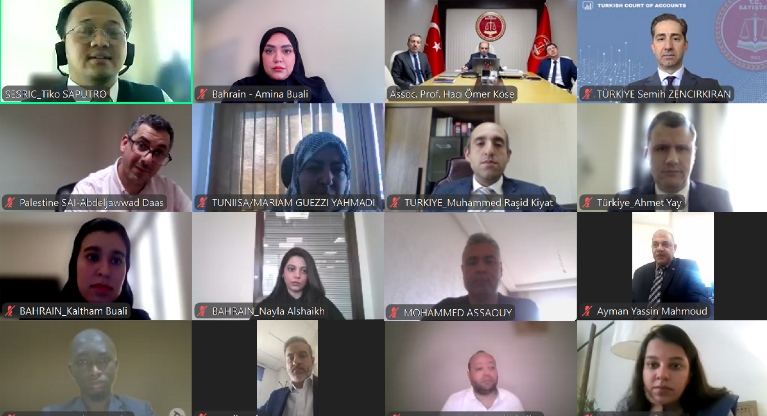
NAO employees also participated in 3 training courses on digitization and the use of artificial intelligence in auditing. The first was organized by the Statistical, Economic and Social Research and Training Center for Islamic Countries (SESRIC) in cooperation with the Turkish Court of Accounts, the second by the General Secretariat of the Arab Organization of Supreme Audit Institutions (ARABOSAI) in cooperation with the State Financial and Administrative Audit Authority of the Sultanate of Oman, and the third by ARABOSAI in cooperation with the Court of Accounts of the Kingdom of Morocco.
In addition to exchanging knowledge and sharing experiences, the courses reviewed best practices in employing modern technologies to improve public administration and governance and enhance the efficiency and accuracy of audits using artificial intelligence technologies.
Furthermore, they discussed strengthening the capabilities of SAIs in benefiting from artificial intelligence technologies, applying their tools in key areas such as fraud detection and risk forecasting, and analyzing the challenges and risks (technical, ethical, and legal) associated with the application of these technologies.
Moreover, participants learnt about the methodologies of tracking recommendations from documentary approaches to modern digital solutions, supported by an analytical approach, and digital tracking tools to ensure effective monitoring of the implementation of recommendations and analyze the impact of tracking on the level of implementation of recommendations, the performance of the audited entities and the challenges posed in order to improve audit work.
Content last updated: 15 October 2026
Thank you for your opinion!
